

It will be blog about my healing journey. All about me and my journey from poor situations and poor health to healthy and happy life you can see here http://www.amazon.com/dp/B002BA6CZY also I'll write about my favorite tv shows, movies and books, actresses and actors. In the time of hard situation I 've got a great help from reading, watching and writing. I am accepting ad&links on the blog.
Monday, September 19, 2011
Druid Tarot reading for tomorrow
Princess of wand (reverse) - you'll be able to reconnect with your source of energy and resolve difficulties that are causing confusion or blokages


Friday, September 16, 2011
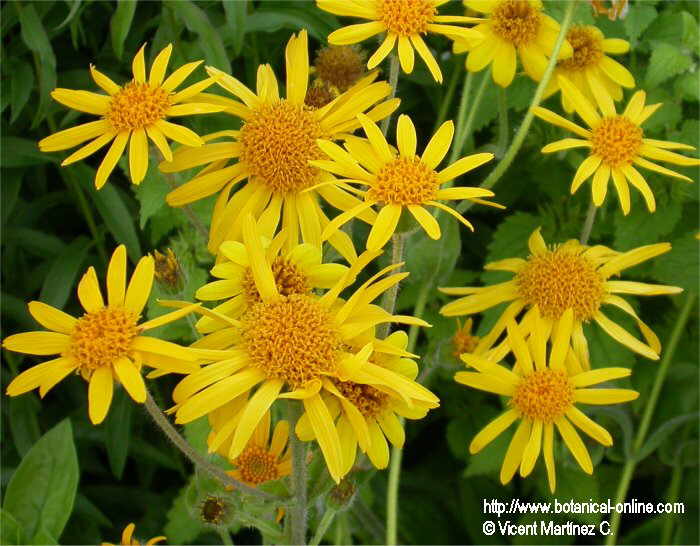
Herb of the day
Arnica- it had been known to treat bruises and sprains; stimulate the immune system and the heart. Safer use it in homeopathic form.

Today druid tarot reading
The Fool: Innocence; Freedom; Potential; Trust; Play; Openness; Courage; Optimism;
trusting in the ultimate goodness
 of life

Tuesday, September 13, 2011
The Touchstone Process: an ongoing critical evaluation of reiki in the scientific literature.
Holist Nurs Pract. 2010 Sep-Oct;24(5):260-76.
 Baldwin AL, Vitale A, Brownell E, Scicinski J, Kearns M, Rand W.
Source
Department of Physiology, College of Medicine, University of Arizona, Tucson, AZ 85724, USA. abaldwin@u.arizona.edu
Abstract
BACKGROUND:
Reiki is used by a growing number of people but little is known about the scientific basis for its use.
PURPOSE:
The Touchstone Process was developed as an ongoing process to systematically analyze published, peer-reviewed studies of Reiki, the results being made accessible to the public online.
METHOD:
Thirteen scientifically qualified experts in the field of Reiki were assembled into 3 teams to retrieve, evaluate, and summarize articles using standardized, piloted evaluation forms.
RESULTS:
Summaries of 26 Reiki articles, including strengths and weaknesses, were posted on a newly developed Web site (www.centerforreikiresearch.org), together with an overall summary of the status of Reiki research and guidelines for future research: The Touchstone Process determined that only 12 articles were based on a robust experimental design and utilized well-established outcome parameters. Of these articles, 2 provided no support, 5 provided some support, and 5 demonstrated strong evidence for the use of Reiki as a healing modality.
CONCLUSION:
There is a need for further high-quality studies in this area.
PMID:
20706088
[PubMed - indexed for MEDLINE]

Immediate Effects of Reiki on Heart Rate Variability, Cortisol Levels, and Body Temperature in Health Care Professionals With Burnout.
Biol Res Nurs. 2011 Aug 5. [Epub ahead of print]
 Díaz-Rodríguez L, Arroyo-Morales M, Fernández-de-Las-Peñas C, García-Lafuente F, García-Royo C, Tomás-Rojas I.
Abstract
Burnout is a work-related mental health impairment comprising three dimensions: emotional exhaustion, depersonalization, and reduced personal accomplishment. Reiki aims to help replenish and rebalance the body's energetic system, thus stimulating the healing process. The objective of this placebo-controlled, repeated measures, crossover, single-blind, randomized trial was to analyze the immediate effects of Reiki on heart rate variability (HRV), body temperature, and salivary flow rate and cortisol level in health care professionals with burnout syndrome (BS). Participants included 21 health care professionals with BS, who were asked to complete two visits to the laboratory with a 1-week interval between sessions. They were randomly assigned the order in which they would receive a Reiki session applied by an experienced therapist and a placebo treatment applied by a therapist with no knowledge of Reiki, who mimicked the Reiki treatment. Temperature, Holter ECG recordings (standard deviation of the normal-to-normal interval [SDNN], square root of mean squared differences of successive NN intervals [RMSSD], HRV index, low frequency component [LF], and high frequency component [HF]), salivary flow rate and cortisol levels were measured at baseline and postintervention by an assessor blinded to allocation group. SDNN and body temperature were significantly higher after the Reiki treatment than after the placebo. LF was significantly lower after the Reiki treatment. The decrease in the LF domain was associated with the increase in body temperature. These results suggest that Reiki has an effect on the parasympathetic nervous system when applied to health care professionals with BS.

Effects of Reiki on anxiety, depression, pain, and physiological factors in community-dwelling older adults.
EP64VS37USAW
Res Gerontol Nurs. 2010 Jul;3(3):187-99. doi: 10.3928/19404921-20100601-01. Epub 2010 Jun 30.
Effects of Reiki on anxiety, depression, pain, and physiological factors in community-dwelling older adults.
Richeson NE, Spross JA, Lutz K, Peng C.
College of Nursing and Health Professions, University of Southern Maine, Portland, Maine 04104-9300, USA. richeson@usm.maine.edu
Abstract
The purpose of this study was to evaluate the effect of Reiki as an alternative and complementary approach to treating community-dwelling older adults who experience pain, depression, and/or anxiety. Participants (N = 20) were randomly assigned to either an experimental or wait list control group. The pre- and posttest measures included the Hamilton Anxiety Scale, Geriatric Depression Scale-Short Form, Faces Pain Scale, and heart rate and blood pressure. The research design included an experimental component to examine changes in these measures and a descriptive component (semi-structured interview) to elicit information about the experience of having Reiki treatments. Significant differences were observed between the experimental and treatment groups on measures of pain, depression, and anxiety; no changes in heart rate and blood pressure were noted. Content analysis of treatment notes and interviews revealed five broad categories of responses: Relaxation; Improved Physical Symptoms, Mood, and Well-Being; Curiosity and a Desire to Learn More; Enhanced Self-Care; and Sensory and Cognitive Responses to Reiki.


Catalytic therapy of cancer with ascorbate and extracts of medicinal herbs. Rozanova Torshina N, Zhang JZ, Heck DE.
My scientific article :
http://www.ncbi.nlm.nih.gov/pubmed/18955293?ordinalpos=1&itool=EntrezSystem2.PEntrez.Pubmed.Pubmed_ResultsPanel.Pubmed_DefaultReportPanel.Pubmed_RVDocSum
 Evid Based Complement Alternat Med. 2010 Jun;7(2):203-12. Epub 2007 Dec 26.
Catalytic therapy of cancer with ascorbate and extracts of medicinal herbs.
Rozanova Torshina N, Zhang JZ, Heck DE.
Source
Department of Chemistry and Biochemistry, University of California, Santa Cruz, CA 95064 and Department of Cancer Biology and Pharmacology, University of Illinois College of Medicine, Peoria, IL 61605, USA.
Abstract
Catalytic therapy (CT) is a cancer treatment modality based on the generation of reactive oxygen species (ROS) using a combination of substrate molecules and a catalyst. The most frequently used substrate/catalyst pair is ascorbate/Co phthalocyanine (PcCo). In the present work, herb extracts containing pigments have been studied as a catalyst in place of PcCo. Extracts from herbs are expected to have efficiency comparable with that of phthalocyanines but as natural products, to exhibit fewer side effects. The present studies demonstrate that a combined use of ascorbate and herbal extracts results in ROS production and a significant decrease in the number of cancer cells after a single in vitro treatment. Treatment with ascorbate in conjunction with extracts prepared from several medicinal herbs stimulated apoptosis and disrupted the cell cycle. The number of cells accumulating in the sub-G0/G1 stage of the cell cycle was increased 2- to 7-fold, and cells in G(2)/M increased 1.5- to 20-fold, indicating that the treatment protocol was highly effective in suppressing DNA synthesis and potentially reflecting DNA damage in the tumor cells. In addition, 20-40% of the cells underwent apoptosis within 24 h of completing treatment. Our results suggest that herbal extracts can function as CT catalysts in the treatment of cancer.

Subscribe to:
Posts (Atom)
